You switch your heat pump to HEAT on a chilly Richardson morning, but the air coming from the vents feels cool instead of warm. Before assuming the system is broken, remember that heat pumps operate differently from gas furnaces. Their supply air is typically around 85°F to 100°F, compared with approximately 120°F to 140°F from a gas furnace. That lower temperature can feel cool against your skin even when the system is heating your home properly.
If your Richardson heat pump is blowing genuinely cold air in HEAT mode, the cause could be a normal defrost cycle, an incorrect thermostat setting, a stuck reversing valve, low refrigerant, failed auxiliary heat, or a blocked outdoor coil. Some of these conditions resolve on their own, while others require professional diagnosis. Understanding the difference can help you determine whether to wait a few minutes, check your thermostat, or call an HVAC technician.
Heat Pump Air Naturally Feels Cooler Than Furnace Air
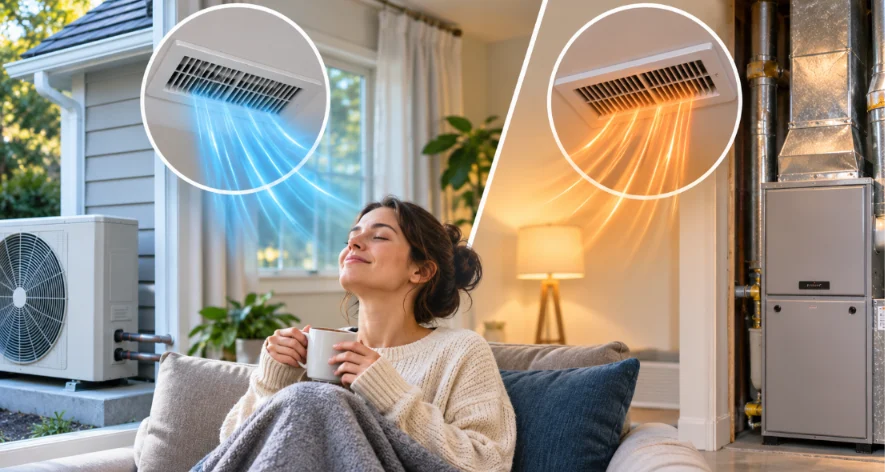
A heat pump moves heat from the outdoor air into your home, delivering a steady stream of warm air over long run times. That air is usually cooler than a furnace's short blasts of hot air, so homeowners who grew up with gas heat often notice the difference.
The test is the room, not the vent. If the thermostat setting is holding steady and the house feels comfortable, the heat pump is doing its job, even if the air at the register feels only mildly warm. A slow, even warm-up is how heat pumps are designed to work.
The concern starts when the air feels truly cold, when the house falls behind the thermostat, or when cool air continues for long stretches. Those signs point to one of the specific causes below, and most of them can be narrowed down from the thermostat and the outdoor unit.
The Heat Pump Is Running a Defrost Cycle
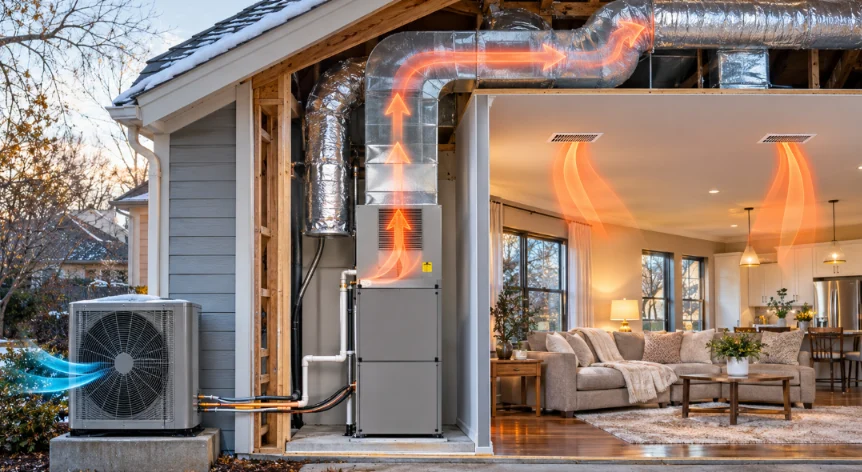
On cold, damp days, frost forms on the outdoor coil and blocks airflow. To clear it, the heat pump runs a defrost cycle. Trane explains that the reversing valve switches refrigerant flow to melt the ice, and homes without backup heat may notice cool air from the vents meanwhile.
Defrost cycles are normally brief. Trane says its demand-defrost systems typically run about 3 to 5 minutes, although timing varies by equipment and conditions. You may see steam rising from the outdoor unit while it runs. Once the frost clears, the system switches back to heating and the warm air returns.
A defrost cycle every so often on a cold morning is normal. Thick ice that stays on the outdoor unit, or cool air that lasts much longer than a few minutes, is not. That points to a defrost, airflow or refrigerant problem, and you should never chip at the ice.
Five Faults That Make a Heat Pump Blow Cold Air
If the air stays cold well beyond a normal defrost cycle, these are five common causes to consider. They are listed from the simplest to check to the ones that need a technician.
The Thermostat Is Set Wrong
Confirm the thermostat is calling for heat and that the setpoint is above the room temperature. A fan set to ON instead of AUTO can also blow air between heating cycles, and that air feels cool because the heat pump is not actively heating at the time.
The Reversing Valve Is Stuck
The reversing valve switches the heat pump between heating and cooling. If it sticks in the cooling position, the system blows cold air in heat mode and may even cool the house. A stuck valve, or a failed valve coil or control, needs a technician to diagnose.
The Refrigerant Charge Is Low
Refrigerant carries heat from outdoors into your home. A leak lowers the charge, and the heat pump can no longer collect enough heat, so the air comes out lukewarm or cool. Low refrigerant also strains the compressor, so it needs a leak repair, not just a top-off.
The Backup Heat Has Failed
Many ducted heat pumps use electric auxiliary heat, while some systems use another backup source such as a gas furnace. If the backup heat or its controls fail, the home may struggle during colder conditions or defrost. The thermostat may show AUX heat even though the home is not warming as expected.
Airflow Is Blocked
A clogged filter, closed vents or a dirty indoor coil cut the airflow the heat pump needs. Outdoors, leaves, debris or heavy ice on the coil block heat collection. Either way, the system struggles to deliver warm air, and it can trip safety controls or freeze up.
The takeaway is that thermostat settings and dirty filters are simple homeowner checks, while a stuck reversing valve, low refrigerant and failed backup heat need a technician. If the thermostat and filter checks do not solve persistent cold air or the home keeps losing temperature, schedule service.
Switching to Emergency Heat Can Hide the Real Problem
When a heat pump blows cool air, many homeowners switch the thermostat to Emergency Heat. Emergency Heat locks out normal heat-pump operation and relies on the system's backup heat source. On systems with electric resistance backup, that can use substantially more electricity than normal heat-pump operation.
Here is the trap. Emergency Heat does not diagnose or correct the underlying heat-pump problem. It is a backup operating mode, not a repair.
Use Emergency Heat only when appropriate for your system, such as when normal heat-pump operation has failed, and schedule service to find the cause. A heat pump repair visit can diagnose the problem and restore normal operation.
What Is the Cool Air Telling You?
Different patterns of cool air point to different causes. The table below matches what you notice to the most likely reason and the next step, so you can tell whether to wait a few minutes, change a setting or schedule a repair before the next cold night arrives:
| What you notice | Likely cause | Next step |
|---|---|---|
| Mildly warm air, house comfortable | Normal heat pump operation | No action needed |
| Brief cool air with steam outside | Defrost cycle | Wait for heating to resume |
| Cool air between cycles | Fan set to ON | Switch the fan to AUTO |
| Cold air for long periods, house losing temperature | Thermostat, reversing valve, refrigerant, or control issue | Schedule service |
| Lukewarm air with poor heating performance | Airflow, refrigerant, capacity, or equipment issue | Schedule service |
| Thick ice that does not clear | Defrost, airflow or refrigerant problem | Turn off and call |
Most homeowners can rule out the first three rows in a few minutes. The last three need instruments and training, because they involve refrigerant, electrical controls and the reversing valve. Fixing them early also protects the compressor, the most expensive part of the system.
Richardson Weather Makes Some Causes More Likely
Richardson winters are mild much of the time. NOAA's 1991 to 2020 normals for Dallas Love Field put the average January high at about 58°F and the low at about 38°F, with roughly nine January nights at or below freezing. Heat pumps can operate efficiently through much of that weather.
Cold snaps change the picture. During Winter Storm Uri, DFW Airport recorded minus 2°F on February 16, 2021. Cold, damp mornings bring more frequent defrost cycles, and very cold nights lean harder on backup heat, which is when a failed strip or control shows up first.
Brief cool air can be part of normal winter operation, especially during defrost, but persistent cold air or falling indoor temperature deserves a closer look. Persistent cold air in mild weather is less likely to be caused by defrost, so check the thermostat and fan settings first and schedule service if the problem continues.
When Should You Call for Heat Pump Service?
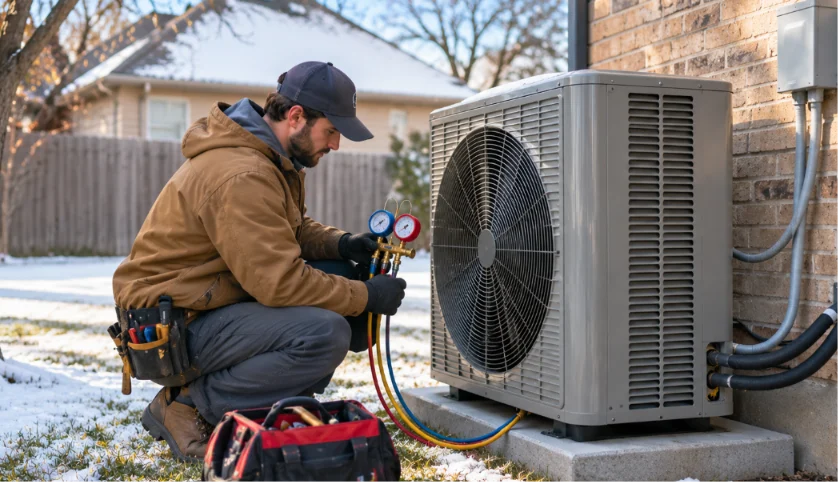
Start with the quick checks. If they do not bring back warm air, a technician should look at the system. Call for service when cool air comes with any of these signs:
- Cold air on mild days: Defrost is not the cause.
- Ice that will not clear: A defrost or refrigerant fault.
- The house keeps losing temperature: The heat pump cannot keep up.
- Frequent AUX heat: Could reflect high heating demand, thermostat or control settings, or a heat-pump performance problem.
If an aging heat pump needs a major repair, such as a compressor replacement, compare the repair cost and remaining system condition with heat pump installation options. A guide comparing a heat pump vs. furnace in Texas can also help.
Why Choose CityLine Air Conditioning for Heat Pump Repair in Richardson?
At CityLine Air Conditioning, we help Richardson homeowners diagnose heat pump problems that affect indoor comfort, including systems that blow cool air while running in HEAT mode. Based on South Sherman Street in Richardson, we service Amana, Carrier, Trane, Lennox, Goodman, and Daikin equipment. Two of our technicians hold NATE certification, and our owner, Ed Hafez, holds EPA Section 608 certification.
When your heat pump struggles to produce warm air, diagnosis can include the defrost controls, reversing valve, refrigerant circuit, backup heat, and airflow depending on the symptoms. Our diagnostic fee is $89, which is waived when you approve a same-day repair. We hold Texas HVAC license TACLB00033708E and provide professional heat pump repair in Richardson to help restore reliable heating.
If your heat pump has recurring problems or is approaching the end of its service life, we can also discuss your options for heat pump installation. Our Healthy Air Conditioner Club includes two annual tune-ups, 15% off repairs, and no emergency service charge, starting at $189 per year. Our phones are answered around the clock. Call (972) 776-4455 to schedule an appointment.
Frequently Asked Questions
Is it normal for a heat pump to blow cool air?
Briefly, yes. A defrost cycle can blow cool air for a few minutes on cold, damp days. Heat pump air also runs cooler than furnace air, about 85 to 100°F according to Carrier, so it can feel cool on your hand while still heating the house.
How long does a heat pump defrost cycle last?
Trane says its demand-defrost systems typically run about 3 to 5 minutes, but defrost timing varies by model and conditions. You may see steam from the outdoor unit and feel cooler air indoors during that time. If cool air continues well beyond defrost or ice stays on the outdoor unit, have the system checked.
Can a heat pump get stuck in cooling mode?
Yes. If the reversing valve, its coil or the control that switches it fails, the heat pump can stay in cooling mode and blow cold air when you want heat. This needs a technician to diagnose, because the valve is part of the sealed refrigerant system.
Should I use emergency heat if my heat pump blows cold air?
Use Emergency Heat only when appropriate for your system, such as when normal heat-pump operation has failed. It relies on the backup heat source and does not repair the underlying problem, so schedule service to restore normal operation.
Why does my heat pump blow cold air when the fan is on?
If the thermostat fan is set to ON, the blower runs between heating cycles, moving room air through the vents without adding heat. That air feels cool. Switching the fan to AUTO lets the blower run only while the heat pump is heating.