
There’s a specific moment every Texas homeowner dreads: you walk over to a vent, hold your hand up, and feel nothing but warm air. The system is on. The thermostat says 72°F. But your house is 84° and climbing. Nine times out of ten, when the air is blowing but not cooling, the trail leads straight to one component: the compressor.
The problem is, most homeowners aren’t sure how to confirm that suspicion. A quick Google search returns dozens of possible AC problems, from dirty filters to frozen coils to bad thermostats. So how do you know when it’s actually the compressor? And if it is, should you repair it, replace it, or replace the whole system?
That’s exactly what this guide covers. We’ll break down five specific symptoms that point to compressor failure, explain what causes these failures in the first place, and give you real DFW-area pricing so you can make an informed decision without guesswork.
Your AC compressor is essentially the engine that drives the entire cooling process. Picture it like the engine in your car: without it running, everything else, the fans, the ductwork, and even the thermostat, is just sitting there doing nothing useful. The compressor’s job is to pressurize refrigerant and push it through a continuous loop that pulls heat out of your indoor air and dumps it outside.
Here’s how the process works in simple terms:
Without a functioning compressor, refrigerant can’t circulate. And without refrigerant circulation, your AC simply can’t cool your home. That’s why compressor problems are such a big deal, and why they often require prompt professional attention. For a deeper look at how this critical component works, check out our guide on understanding your AC compressor.
A failing compressor rarely gives out without warning. In most cases, there are clear bad AC compressor symptoms that show up days or even weeks before a complete failure. Catching these signs early can mean the difference between a manageable repair and a full system replacement.
This is usually the first thing homeowners notice. The AC runs, the fan blows, but the air coming from your vents is lukewarm or not as cold as it used to be. You might find yourself lowering the thermostat further and further without getting the results you expect.
When the compressor starts to fail, it can’t pressurize refrigerant effectively. That means the refrigerant doesn’t absorb enough heat from your indoor air, and your home stays warm. In Texas, where summer temperatures regularly push past 100°F, even a partially failing compressor can make your house unbearable within hours.
Keep in mind that weak cooling can also be caused by low refrigerant, a dirty air filter, or frozen evaporator coils. But if you’ve checked those basics and the problem persists, the compressor is the most likely culprit. A licensed technician offering AC repair in Richardson, TX, can run diagnostic tests to confirm the issue.
Your outdoor AC unit should produce a steady, low hum when it’s running. If you start hearing grinding, clanking, rattling, or screeching sounds, that’s a red flag you shouldn’t ignore.
Here’s what different noises can indicate:
These noises won’t go away on their own. In fact, they tend to get worse over time. If you hear anything unusual from your outdoor unit, turn the system off and call for a professional inspection before the damage spreads to other components.
If your AC trips the circuit breaker once, it might be a fluke, maybe a brief power surge, or a hot day pushing the system hard. But if it happens repeatedly, you’ve got a serious problem that likely involves the compressor.
A failing compressor often draws excessive electrical current. This can happen because of:
Safety Warning: Never repeatedly reset a tripping breaker to keep your AC running. This is a fire hazard and can damage your electrical panel. Turn the system off and call an HVAC professional immediately. If you need help fast, our emergency AC repair team in Richardson is available 24/7.
You set the thermostat, wait for the familiar click and hum, and… nothing happens. The indoor fan may blow, but the outdoor unit sits silent. Or the entire system simply refuses to start.
When the compressor has completely failed, the outdoor unit can’t start its cooling cycle. But before you assume the worst, check a few things:
If everything checks out and the unit still won’t start, the compressor motor may have seized, the start capacitor may have failed, or there could be an electrical fault within the compressor itself. A technician will need to test the compressor’s electrical resistance and amperage to confirm the diagnosis.
A gradual increase in your electric bill during summer isn’t unusual in Texas. But a sudden, unexplained spike, say a $50 to $150 jump compared to the same month last year, often points to an AC system that’s working much harder than it should.
A failing compressor loses efficiency progressively. It runs longer cycles, struggles to reach the set temperature, and consumes more electricity in the process. You might also notice that your AC runs almost continuously but never quite gets your home to a comfortable temperature.
Check your utility bills from the past few months. If they’ve been climbing steadily even though your usage habits haven’t changed, it’s worth having your system inspected. The compressor isn’t always the cause, but it’s one of the most common explanations for dramatic efficiency drops.
Understanding what causes AC compressor failure helps you take steps to prevent it. Most compressor failures in the DFW area trace back to one of these four root causes:
AC compressors are built to last, but they’re not immortal. In the Dallas–Fort Worth climate, where systems run heavily from April through October, most compressors last between 12 and 15 years with proper care. After that, internal components wear down, seals degrade, and efficiency drops, even in systems that have been well maintained.
If your system is approaching or past the 12-year mark, compressor failure isn’t a matter of if, but when. Planning ahead with a professional assessment can help you avoid an emergency breakdown during the hottest week of summer.
Electrical problems are one of the leading causes of premature compressor failure. Power surges, voltage fluctuations, corroded contactors, and faulty capacitors all put stress on the compressor motor. Over time, this stress damages the motor windings, leading to overheating, ground faults, and eventual burnout.
Texas power grids can be unpredictable, especially during peak summer demand. A whole-home surge protector and regular electrical inspections of your HVAC system can go a long way toward protecting your compressor.
Low refrigerant is arguably the single most damaging condition for a compressor. Refrigerant doesn’t “get used up” during normal operation. If levels are low, it almost always means there’s a leak somewhere in the system.
When the refrigerant is low, the compressor runs hotter because it’s not receiving enough cooling gas. That excess heat accelerates wear on internal seals and bearings. In some cases, a slow leak can destroy a compressor over just one or two cooling seasons. On the flip side, an overcharged system (too much refrigerant) creates dangerously high pressure inside the compressor, which can also lead to failure.
Regular AC maintenance in Richardson includes a refrigerant level check that can catch leaks before they become compressor killers.
Skipping annual tune-ups is the most preventable cause of compressor failure. Dirty condenser coils force the compressor to work harder to reject heat. Clogged air filters restrict airflow across the evaporator coil, which can cause the refrigerant to return to the compressor as a liquid instead of a gas (a condition called liquid slugging that can destroy a compressor almost instantly).
Loose electrical connections, worn contactors, and failing capacitors are all things a technician catches during a routine maintenance visit. Left unchecked, these minor issues snowball into major compressor damage.
You don’t need to be an HVAC technician to start narrowing down a compressor problem. Here’s a step-by-step approach any homeowner can follow before calling for professional help:
Verify your thermostat is set to “cool” and the target temperature is at least 3–5 degrees below the current room temperature. Replace the batteries if it’s a battery-operated thermostat. Check both circuit breakers, one for the indoor air handler, one for the outdoor unit, and the outdoor disconnect switch.
Go outside and stand near your AC unit while it’s trying to run. Is the fan spinning? Can you hear the compressor humming? If the fan runs but you don’t hear the compressor engage, that’s a strong indicator. If you hear clicking, buzzing, or the unit tries to start and immediately shuts off, the compressor or its starting components, such as the capacitor and the contactor, are likely the problem.
Place your hand in front of a supply vent inside your home. Is the air cool, lukewarm, or room temperature? Lukewarm air while the system is running suggests the compressor isn’t effectively compressing refrigerant. Room-temperature air could mean the compressor isn’t running at all.
Look at your outdoor unit and the refrigerant lines running to it. Frost or ice buildup on the copper lines or the unit itself can indicate low refrigerant, which often accompanies compressor issues. Also, check your indoor evaporator coil for ice.
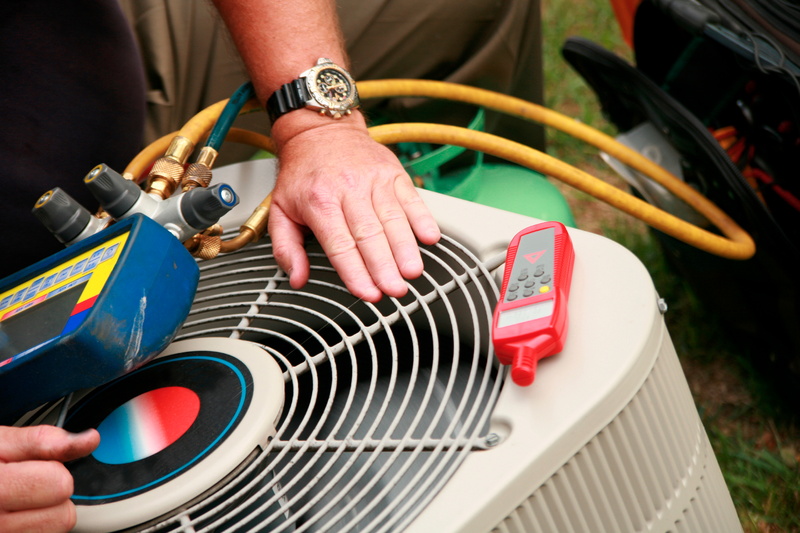
If your observations point to a compressor problem, the next step is a professional diagnosis. A technician will use specialized tools to test the compressor’s electrical resistance, amperage draw (how much current the compressor pulls), refrigerant pressures on the suction and discharge sides, and temperature differentials to confirm whether the compressor has failed and determine the type of failure.
This information is critical because it determines whether the compressor can be repaired or whether replacement, either of the compressor alone or the entire system, is the right call.
Once you’ve confirmed a compressor problem, the big question becomes: should you repair it or replace it? Here’s a realistic breakdown of what each option costs in the Dallas–Fort Worth area.
| Service | Typical Cost (DFW Area) | What's Included |
|---|---|---|
| Capacitor Replacement | $150 – $400 | New start or run capacitor, labor |
| Contactor Replacement | $150 – $350 | New electrical contactor, labor |
| Hard Start Kit Install | $100 – $300 | Boosts compressor startup performance |
| Compressor Replacement Only | $1,800 – $3,200 | New compressor, refrigerant, labor (4–6 hours) |
| Full AC System Replacement | $4,500 – $9,000+ | New condenser, evaporator coil, refrigerant lines, thermostat, labor |
Note: These are estimates based on typical DFW market pricing as of 2026. Your actual cost will depend on your system’s size (tonnage), refrigerant type, brand, and accessibility.
Pro Tip: If repair costs exceed $2,000 and your system is older than 10 years, replacement is almost always the smarter long-term option. You’ll recoup the difference through lower energy bills and avoided future repairs. Talk to a Plano AC repair specialist for a personalized cost analysis.
This is one of the most common questions we hear from homeowners dealing with AC compressor failure symptoms. The answer depends on several factors specific to your situation. Here’s a clear decision framework:
As a general rule of thumb, if the repair cost exceeds 50% of the price of a new system, replacement is the better investment. For most DFW homeowners, that tipping point falls right around the $2,000–$2,500 mark for repair costs.
If you’re leaning toward a full replacement, our team handles professional AC installation in Richardson and throughout the DFW metroplex, with financing options to make the investment more manageable.
The good news is that most compressor failures are preventable. By investing a little time and money in routine maintenance, you can significantly extend your compressor’s lifespan and avoid costly emergency repairs. Here’s what matters most:
This is the single easiest thing you can do to protect your compressor. A clogged filter restricts airflow, which causes the evaporator coil to freeze. When ice melts, and liquid refrigerant reaches the compressor, it can cause immediate and catastrophic damage (liquid slugging). In Texas, where dust and pollen levels are high, replace standard 1-inch filters every 30–60 days during the cooling season. Higher-quality pleated filters can last 60–90 days.
A thorough annual tune-up catches small problems before they escalate into compressor-killing issues. During a professional maintenance visit, your technician will:
The ideal time to schedule this in DFW is March or April, before the cooling season ramps up. Learn more about what’s included in our AC maintenance services in Richardson, TX.
Your condenser unit needs adequate airflow to reject heat efficiently. Trim shrubs and vegetation back at least 2 feet from all sides. Remove leaves, grass clippings, and debris from the unit’s fins. Gently rinse the coils with a garden hose (not a pressure washer) once or twice per season to remove dirt buildup.
If a technician tells you your refrigerant is low, don’t just have them “top it off” and move on. Insist on a leak search. Simply adding refrigerant without fixing the leak is a temporary fix that guarantees future compressor damage. A proper leak repair costs more upfront but saves you from a $2,000+ compressor replacement down the road.
Consider installing a whole-home surge protector (typically $300–$500 installed) to shield your HVAC system from power surges. Additionally, have your HVAC technician inspect your system’s wiring, capacitors, and contactors during each maintenance visit. Catching a $200 capacitor problem is far cheaper than replacing a $2,500 compressor.
The most common signs of a bad AC compressor include warm air blowing from your vents, unusual grinding or screeching noises from the outdoor unit, the circuit breaker tripping repeatedly, the AC unit not turning on, and unexplained spikes in your electric bill. If you notice one or more of these symptoms, contact a licensed HVAC technician for a professional diagnosis.
It depends on the type of failure. Minor issues like a faulty capacitor or contactor can be repaired affordably. However, if the compressor motor has seized, the internal bearings have failed, or there’s a ground fault in the windings, the compressor itself needs to be replaced. A technician can test the compressor and advise you on the most cost-effective option.
In the Dallas–Fort Worth area, a compressor replacement typically costs between $1,800 and $3,200, including parts and labor. The exact price varies based on the compressor type, refrigerant used, and system size. A full AC system replacement ranges from $4,500 to $9,000 or more, depending on SEER rating and tonnage.
A well-maintained AC compressor typically lasts 12 to 15 years in Texas. The intense summer heat means systems run longer and harder than in milder climates, which accelerates wear. Regular annual tune-ups, timely repairs, and proper refrigerant levels can help you get the most life out of your compressor.
A failing compressor often produces grinding, rattling, screeching, or clunking sounds. Grinding usually means worn internal bearings. Screeching can signal high internal pressure or a failing motor. Rattling may indicate loose hardware or debris. Any unusual noise from your outdoor unit warrants a professional inspection.
If your system is less than 8 years old and still under warranty, replacing just the compressor is usually the smart choice. If the unit is over 10–12 years old, uses R-22 refrigerant, or has needed multiple recent repairs, replacing the whole system provides better long-term value through improved efficiency and a full warranty.
A compressor that repeatedly trips the breaker is drawing too much electrical current. Common causes include a grounded compressor motor, a seized or hard-starting compressor, overheating from low refrigerant, or an internal short circuit. This is a safety hazard, so turn off the system and call an HVAC professional immediately.
Absolutely. Low refrigerant is one of the most common causes of compressor failure. When levels drop due to a leak, the compressor runs hotter than it should, which causes accelerated wear on internal seals and bearings. Over one or two seasons, this excess heat can destroy the compressor entirely. Always address refrigerant leaks promptly.
In most cases, no. If your AC system is more than 10–12 years old, investing $2,000 to $3,000 in a new compressor is risky because other components are likely nearing the end of their lifespan too. A full system replacement gives you better efficiency, a complete warranty, and avoids the likelihood of more repairs in the near future.
The best prevention is consistent maintenance. Schedule annual professional tune-ups, change your air filter every 1–3 months, keep the outdoor condenser unit clear of debris, and address any refrigerant leaks right away. Investing in a surge protector for your HVAC system also helps prevent electrical damage. These simple steps can extend your compressor’s life by several years.
If you’re seeing signs of a bad AC compressor, don’t wait until it fails completely. In a Texas summer, a dead compressor means a dangerously hot house within hours. The sooner you get a professional diagnosis, the more options you’ll have, and the less it’s likely to cost.
At CityLine Air Conditioning, our licensed technicians serve Richardson, Plano, Frisco, Dallas, and communities throughout the DFW metroplex. We offer same-day diagnostics, transparent pricing, and honest recommendations on whether to repair or replace your system. We also provide flexible financing to make full system replacements more affordable when that’s the right path forward.
Call us today or request a free estimate online:
Serving DFW since 2005 · Licensed & Insured · 24/7 Emergency Service Available